
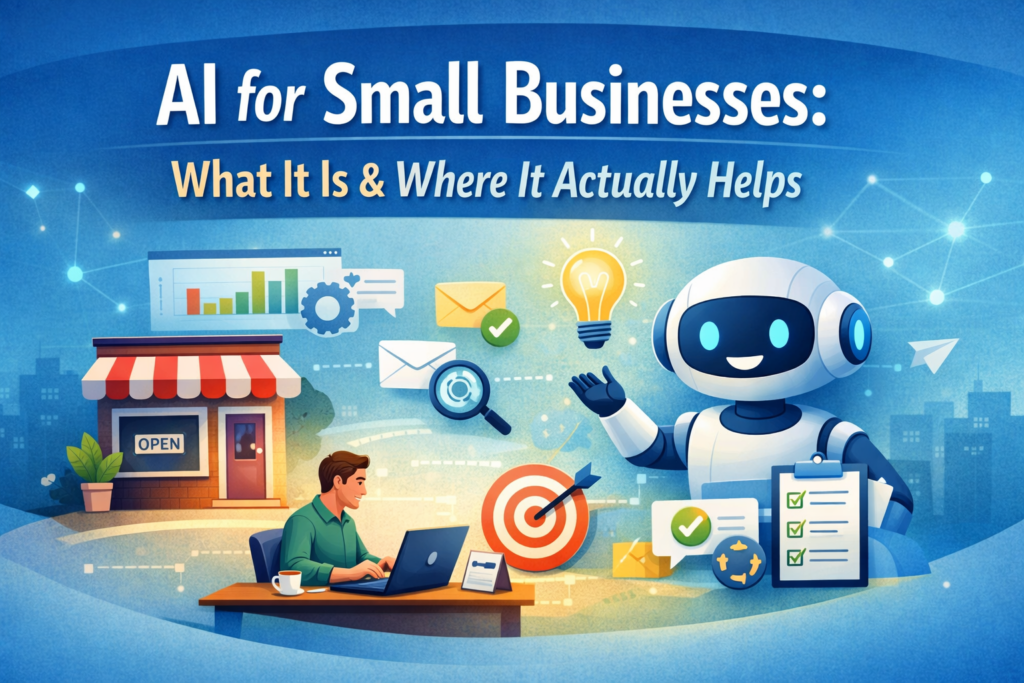
AI is everywhere, and that’s exactly why it’s confusing for many small business owners. Some claim it will replace jobs or run entire companies. Others say it’s just hype. The reality is more practical. AI isn’t magic, and it isn’t just for large corporations. Used correctly, it can save time, reduce friction, and support better decisions without massive investment.
What AI Actually Is (In Simple Terms)
At its core, AI is software designed to analyze patterns, learn from data, and assist with decisions or tasks. For small businesses, AI typically shows up as tools that automate repetitive work, assist with writing, planning, or analysis, improve customer interactions, and help organize and interpret information. You don't need to build anything from scratch to benefit from it.
What AI Is Not
AI is not a replacement for human judgment, a “set it and forget it” solution, a guaranteed fix for broken processes, or something that works without oversight. Businesses that struggle with AI usually expect it to replace thinking instead of supporting it.
Where AI Actually Helps Small Businesses
- Saving Time on Repetitive Tasks
AI can assist with drafting emails or posts, summarizing notes or documents, organizing data, and creating outlines or first drafts. This frees up time for work that actually requires human input. - Improving Customer Communication
AI-powered tools can help respond to common questions, route inquiries more efficiently, and personalize messaging at scale. The key is using AI as a support layer, not a replacement for real interaction. - Supporting Better Decisions
AI can help identify trends in customer behavior, performance patterns, and opportunities you might otherwise miss. It doesn’t make decisions for you — it gives you better information to decide with.
Why Small Businesses Should Approach AI Carefully
AI works best when processes are already clear, expectations are realistic, and someone is responsible for reviewing outputs. Jumping into AI without a plan often leads to frustration or wasted effort.
A Practical Way to Think About AI
Instead of asking, “How can AI run my business?” ask, “Where does my team lose the most time or consistency?” Those gaps are usually where AI delivers real value.
AI Is Meant to Reduce Friction — Not Add It
AI works best when it supports what you already do well. It shouldn’t feel overwhelming, risky,
or like something you have to “figure out all at once.”
For small businesses, the most effective approach is usually incremental:
- Start with one problem
- Apply one tool
- Learn what works
- Adjust from there
If you’re not sure where to start, that’s completely normal. Most small businesses don’t need more technology — they need clarity about where technology actually helps. Over the next few weeks, we’ll be sharing practical, no-hype guidance on how small businesses are using AI in realistic ways. If this topic is something you’re actively exploring and you want clarity — not complexity — feel free to reach out or check back for the next article in this series.
Next, we’ll look at how small businesses are using AI today in practical, affordable ways.